water

Under the waters of emotion

2/12

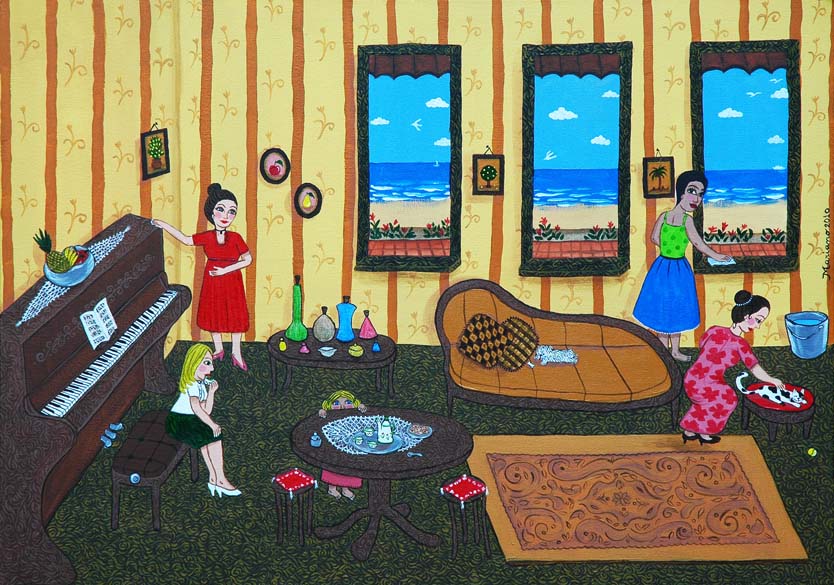
The second piece of this series is about emotions. It is a flood of feelings that seems like drowning, both in thoughts and in material things. What is lost, how will I survive this, what goes and what stays, are some of the questions that invade heart and occupy mind of someone that is about to move, change, relocate, flee, immigrate. The sensation of oddity, the heaviness and lightness of the things that you know so well but are not, or no longer are, a part of you; things and that you want, that you feel you can´t live without, but you can´t carry.
The water is the element that composes most of our human body, water is a part of us, brings us to life, we depend on it and it also can kill us. Under the waters of emotion is that overwhelming feeling of confusion, when what is you and what looks like a part of you are separating. It can be an opportunity of catching new breath but it can also mark a transition that feels like birth or like the death of somethings. If you are under water you need to escape in a hurry to survive, If water is slowly flooding your known space you need to evacuate and leave most things behind, if water is your playground you can plunge into it and then later enjoy the memories it granted you. There are uncountable possibilities of how and what the waters can mean for each story of immigration. Between the lines we all experience some common emotions and milestones on this ocean of possibilities. We are islands surrounded by sea. And each tempest writes a different story on this brief adventure of life.

Under the waters of emotion
60×90 cm – 2023 – Acrylics on canvas
Available for viewing and sales at MakslaXO Gallery, Riga, Latvia.

Luciana Mariano
water – água – vand – acqua

In times of darkness and pain, angels, disguised as friends send us hidden messages that are pure alchemy, pure blessing, pure love.

So did a friend of mine today. I hope you too enjoy this lesson.

Become a Lake

An aging Hindu master grew tired of his apprentice complaining, and so, one morning, sent him for some salt. When the apprentice returned, the master instructed the unhappy young man to put a handful of salt in a glass of water and then to drink it. “How does it taste?” the master asked. “Bitter,” spit the apprentice. The master then asked the young man to take another handful of salt and put it in the lake nearby. Once the apprentice swirled his handful of salt in the water, the old man said, “Now drink from the lake.” As the water dripped down the young man’s chin, the master asked, “How does it taste?” “Fresh,” remarked the apprentice. “Do you taste the salt?” asked the master. “No,” said the young man.

At this, the master took the young man’s hands, offering, “The pain of life is pure salt; no more, no less. The amount of pain in life remains exactly the same. However, the amount of bitterness we taste depends on the container we put the pain in. So when you are in pain, the only thing you can do is to enlarge your sense of things . . .

STOP BEING A GLASS. BECOME A LAKE.”

***********************************

  O velho Mestre pediu a um jovem triste que colocasse uma mão cheia de sal em um copo de água e bebesse.
-‘Qual Ă© o gosto?’ – perguntou o Mestre.
-Ruim’ – disse o aprendiz.
O Mestre sorriu e pediu ao jovem que pegasse outra mĂŁo cheia de sal e levasse a um lago.
Os dois caminharam em silĂŞncio e o jovem jogou o sal no lago. EntĂŁo o velho disse:
-‘Beba um pouco dessa água’.Enquanto a água escorria do queixo do jovem o Mestre perguntou:
-‘Qual Ă© o gosto?’
-‘Bom!disse o rapaz.
-‘VocĂŞ sente o gosto do sal?’ perguntou o Mestre.
-‘NĂŁo disse o jovem.
 Mestre então, sentou ao lado do jovem, pegou em suas mãos e disse
-‘A dor na vida de uma pessoa nĂŁo muda. Mas o sabor da dor depende de onde
a colocamos. Quando vocĂŞ sentir dor, a Ăşnica coisa que vocĂŞ deve fazer Ă©
aumentar o sentido de tudo o que está a sua volta.
É dar mais valor ao que você tem do que ao que você perdeu.
Em outras palavras:
“É deixar de Ser copo, para tornar-se um Lago.”